Sayings of Confucius
The Dial, Vol. III, No. IV (April 1843)
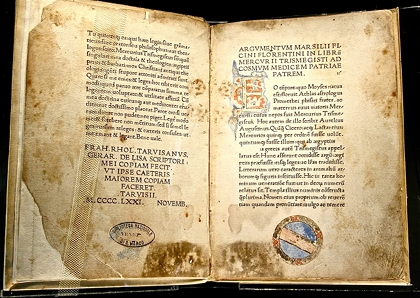
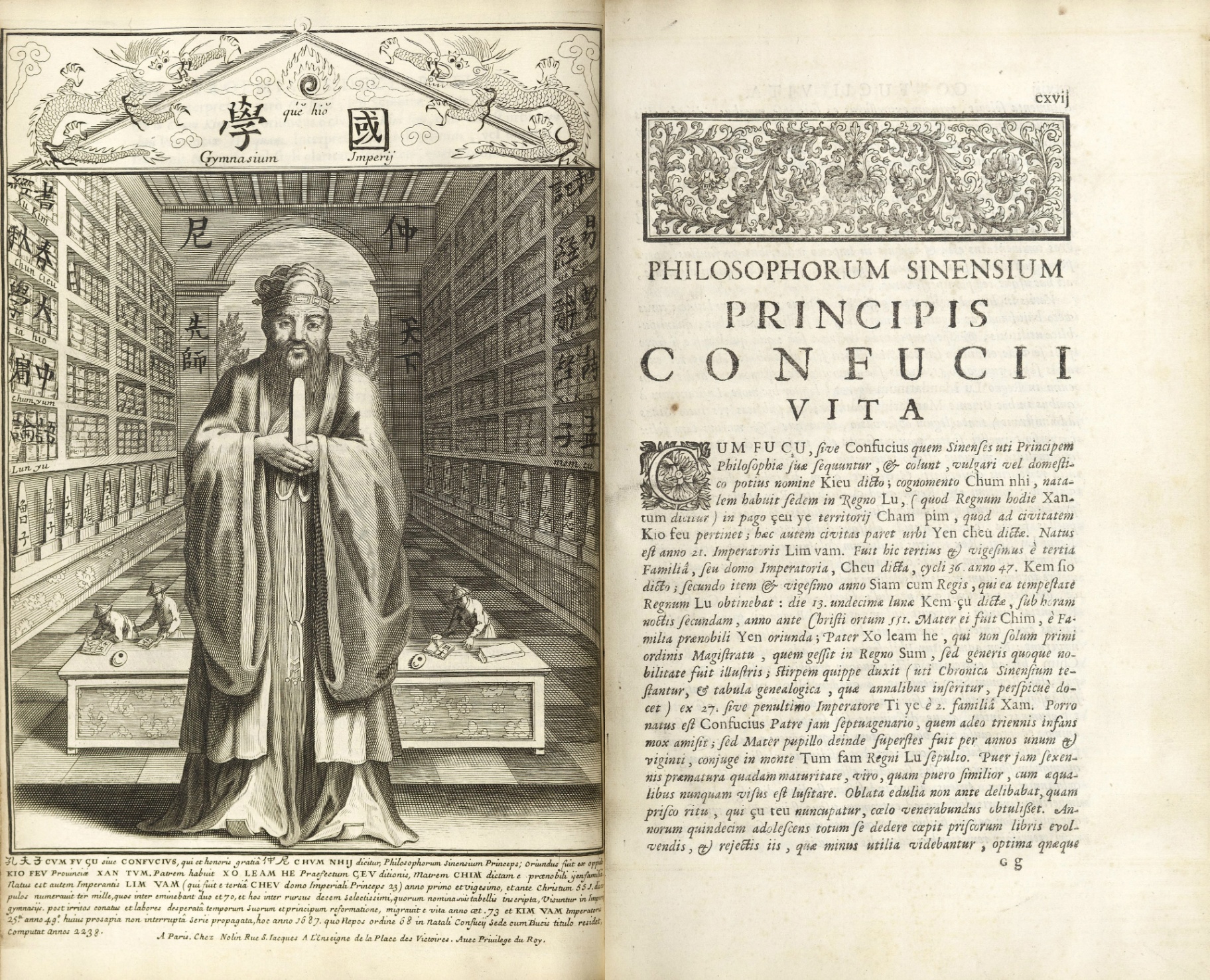
An early modern European presentation of Confucian learning in Latin, framing Confucius as a moral philosopher and introducing core teachings for Western readers encountering the tradition through a missionary-scholarly lens.
Editorial Note: The text and audio below bring together the “Sayings of Confucius” published in The Dial in April 1843 with several additional passages attributed to Confucius from the later “Chinese Four Books” installment of October 1843. The complete selections as they appeared in The Dial can be consulted through the Walden Woods Project.
Chee says, if in the morning I hear about the right way, and in the evening die, I can be happy.
A man's life is properly connected with virtue. The life of the evil man is preserved by mere good fortune.
Coarse rice for food, water to drink, and the bended arm for a pillow—happiness may be enjoyed even in these. Without virtue, riches and honor seem to me like a passing cloud.
A wise and good man was Hooi. A piece of bamboo was his dish, a cocoa-nut his cup, his dwelling a miserable shed. Men could not sustain the sight of his wretchedness; but Hooi did not change the serenity of his mind. A wise and good man was Hooi.
Chee-koong said, Were they discontented? The sage replies, They sought and attained complete virtue;—how then could they be discontented?
Chee says, Yaou is the man who, in torn clothes or common apparel, sits with those dressed in furred robes without feeling shame.
To worship at a temple not your own is mere flattery.
Chee says, grieve not that men know not you; grieve that you are ignorant of men.
How can a man remain concealed! How can a man remain concealed!
Have no friend unlike yourself.
Chee-Yaou enquired respecting filial piety. Chee says, the filial piety of the present day is esteemed merely ability to nourish a parent. This care is extended to a dog or a horse. Every domestic animal can obtain food. Beside veneration, what is the difference?
Chee entered the great temple, frequently enquiring about things. One said, who says that the son of the Chou man understands propriety? In the great temple he is constantly asking questions. Chee heard and replied—"This is propriety."
Choy-ee slept in the afternoon. Chee says, rotten wood is unfit for carving: a dirty wall cannot receive a beautiful color. To Ee what advice can I give? A man's transgression partakes of the nature of his company.
Having knowledge, to apply it; not having knowledge, to confess your ignorance; this is real knowledge.
Chee says, to sit in silence and recall past ideas, to study and feel no anxiety, to instruct men without weariness;—have I this ability within me?
In forming a mountain, were I to stop when one basket of earth is lacking, I actually stop; and in the same manner were I to add to the level ground though but one basket of earth daily, I really go forward.
A soldier of the kingdom of Ci lost his buckler; and having sought after it a long time in vain; he comforted himself with this reflection; "A soldier has lost his buckler, but a soldier of our camp will find it; he will use it."
The wise man never hastens, neither in his studies nor his words; he is sometimes, as it were, mute; but when it concerns him to act and practise virtue, he, as I may say, precipitates all.
The truly wise man speaks little; he is little eloquent. I see not that eloquence can be of very great use to him. Silence is absolutely necessary to the wise man. Great speeches, elaborate discourses, pieces of eloquence, ought to be a language unknown to him; his actions ought to be his language. As for me, I would never speak more. Heaven speaks; but what language does it use to preach to men, that there is a sovereign principle from which all things depend; a sovereign principle which makes them to act and move? Its motion is its language; it reduces the seasons to their time; it agitates nature; it makes it produce. This silence is eloquent.
Confucius exclaimed, Is virtue far off? I only wish for virtue, and virtue comes.
Confucius said, I have not seen any one who loves virtue as we love beauty.
Confucius says, The superior man is not a machine which is fit for one thing only.
Tze Kung asked, Who is a superior man? Confucius replied, He who first practises his words, and then speaks accordingly.
The principles of great men illuminate the whole universe above and below. The principles of the superior man commence with the duties of common men and women, but in their highest extent they illuminate the universe.
Confucius said, Yew, permit me to tell you what is knowledge. What you are acquainted with, consider that you know it; what you do not understand, consider that you do not know it; this is knowledge.
Confucius exclaimed, How vast the influence of the Kwei Shin (spirits or gods). If you look for them, you cannot see them; if you listen, you cannot hear them; they embody all things, and are what things cannot be separated from. When they cause mankind to fast, purify, and dress themselves, everything appears full of them. They seem to be at once above, and on the right, and on the left. The ode says, The descent of the gods cannot be comprehended; with what reverence should we conduct ourselves! Indeed that which is least, is clearly displayed. They cannot be concealed.
Continue exploring: Additional Confucian material appears in the October 1843 Chinese Four Books installment.