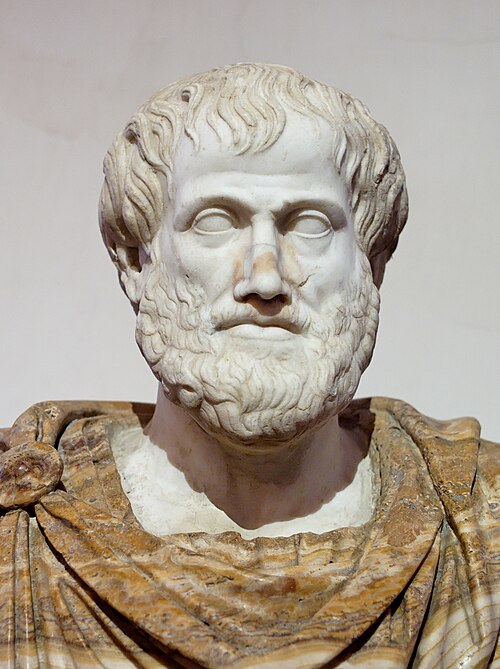
Aristotle
    Back to Cabinet
    Aristotle

    Aristotle(384–322 BCE)

    Greek philosopher and polymath who systematized major fields of inquiry—logic, natural philosophy, ethics, politics, and poetics—and whose works became foundational for later Greek, Islamic, Jewish, and Latin scholastic traditions.

    Read by Emerson (see Emerson's Reading), Thoreau (see Thoreau's Reading) & Alcott (see Alcott's Library)

    2 titles in the Cabinet

    Aristotelous Organon [in Greek]

    Full title: Aristotelous Organon

    The Dial's edition: Geneva, 1605

    A scholarly presentation of Aristotle's logical corpus (categories, interpretation, analytics, topics, sophistical refutations), designed as a rigorous toolkit for argument, demonstration, and method—often printed with Porphyry's Isagoge and humanist apparatus.
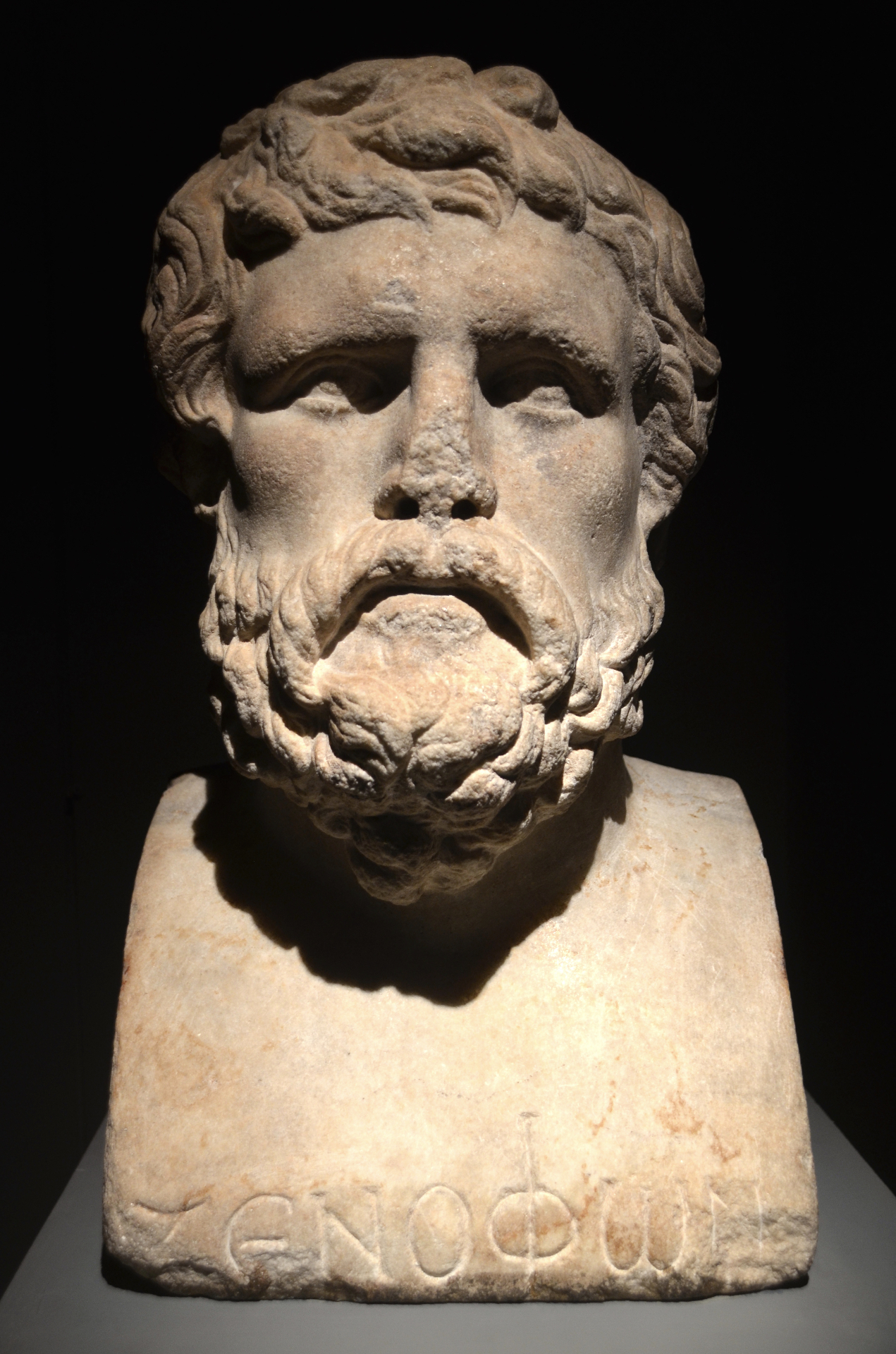
    Metaphysics, by T. Taylor

    Full title[show]

    The metaphysics of Aristotle : translated from the Greek, with copious notes, in which the Pythagoric and Platonic dogmas respecting numbers and ideas are unfolded from antient sources. To which is added, a dissertation on nullities and diverging series

    The Dial's edition: London, 1801

    Aristotle's 'first philosophy' on being, substance, and first causes, rendered in Taylor's distinctive key: heavily annotated to read Aristotle alongside Pythagorean and Platonic number-metaphysics, with an added mathematical 'dissertation.'

    Full textSurvives at Houghton Library

    Read by Alcott (see Alcott's Library)