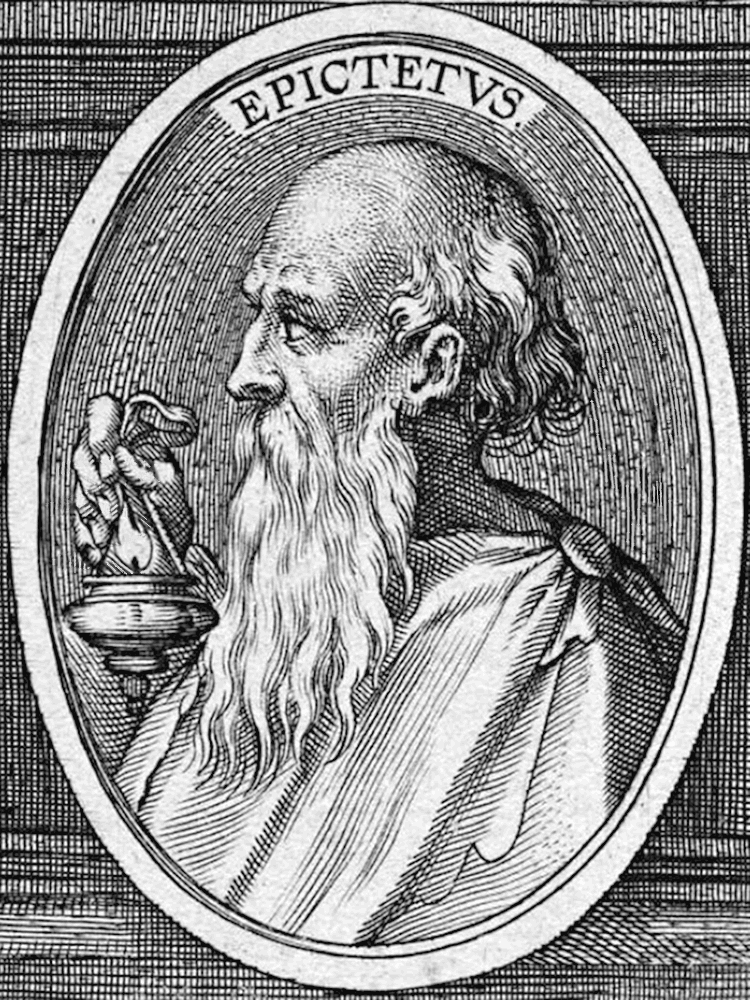
Epictetus
Full title: Epictetus his morals, with Simplicius his comment. Made English from the Greek, by George Stanhope
The Dial's edition: 1721
"That which gives men disquiet is not the nature of things as they really are, but the notions and opinions which they form to themselves concerning them."
The Stoic Enchiridion (and related material) framed as practical ethics for disciplined living, supplemented by Simplicius' commentary to guide readers from maxims to sustained moral practice. Translated by George Stanhope.
Full textExcerpt
Listen to an excerpt0:00 / 0:00
Survives at Houghton LibraryRead by Alcott (see Alcott's Library)