Iamblichus
    Back to Cabinet
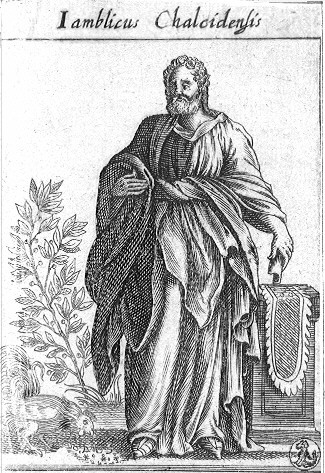
    Iamblichus

    Iamblichus(c. 245–c. 325 CE)

    Syrian Neoplatonist philosopher who founded a major school at Apamea and redirected Platonism toward a more explicitly theurgical and ritual framework. Building on and revising Plotinian metaphysics, he elaborated a richly tiered divine hierarchy and argued that philosophical contemplation alone was insufficient for the soul's return; ritual action and symbolic rites (theurgy) were necessary modes of participation in the divine.

    Read by Emerson (see Emerson's Library), Thoreau (see Thoreau's Reading) & Alcott (see Alcott's Library)
    2 titles in the Cabinet

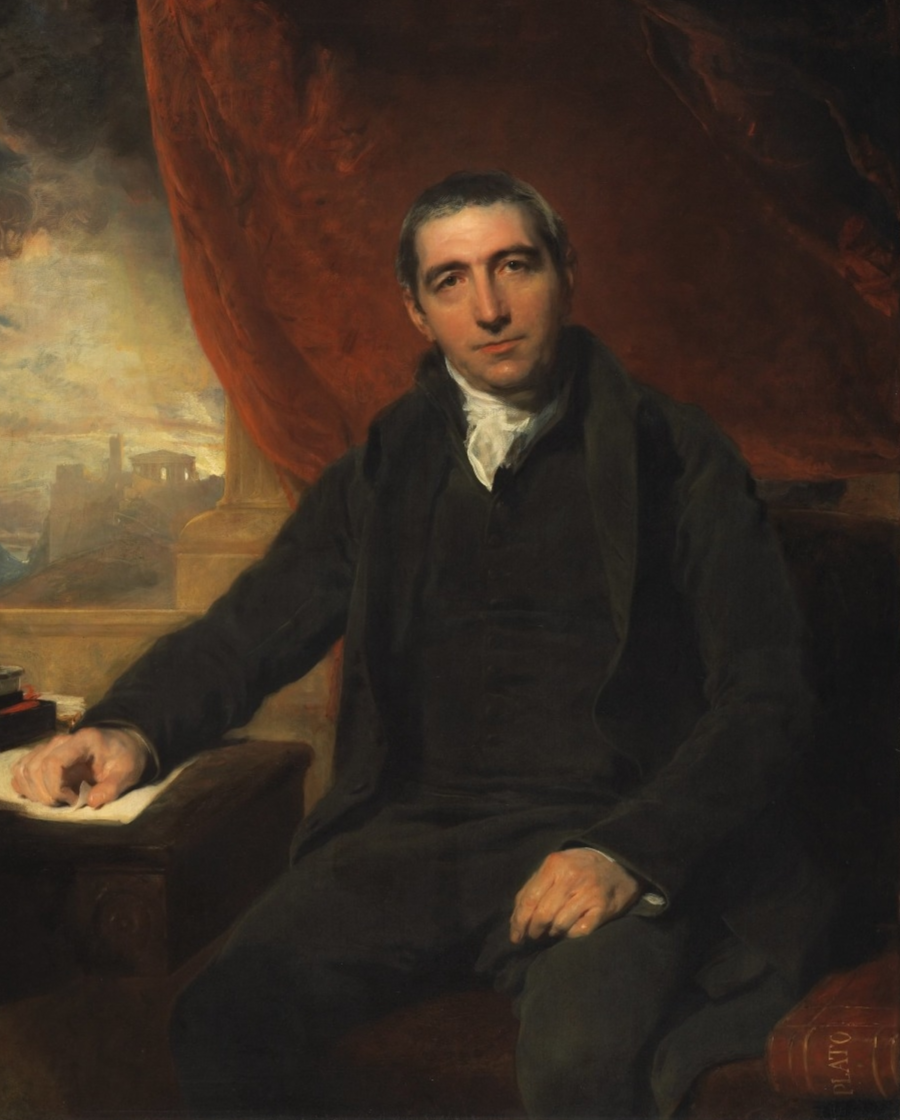
    Life of Pythagoras. By T. Taylor

    Full title[show]

    Iamblichus' Life of Pythagoras, or, Pythagoric life. Accompanied by fragments of the ethical writings of certain Pythagoreans in the Doric dialect; and a collection of Pythagoric sentences from Stobaeus and others, which are omitted by Gale in his Opuscula Mythologica, and have not been noticed by any editor

    The Dial's edition: London, 1818

    A late antique Neoplatonic biography presenting Pythagoras not just as a mathematician, but as a divinely guided teacher and founder of a rigorous spiritual-philosophical community. Part hagiography and part handbook: alongside stories of Pythagoras's travels and reputation, Iamblichus uses the 'life' to lay out what living as a Pythagorean meant.

    Full text
    Listen to an excerpt
    0:00 / 0:00
    Survives at Houghton Library

    Read by Emerson (see Emerson's Library), Thoreau (see Thoreau's Reading) & Alcott (see Alcott's Library)
    on the Mysteries. Translated by T. Taylor

    Full title: Iamblichus on the Mysteries of the Egyptians, Chaldeans, and Assyrians

    The Dial's edition: London, 1821

    "A conception of the mind does not conjoin theurgists with the Gods. The perfect efficacy of ineffable works, divinely performed in a way surpassing all intelligence, impart theurgic union."

    A work of Neoplatonic philosophy primarily concerned with ritual and theurgy. Written as a response to his teacher Porphyry's criticisms, it defends polytheistic cult practices through philosophical argument. Spanning ten books, it explores topics from the soul and gods to sacrifice, Egyptian symbolism, and personal daemons.

    Full textExcerpt

    Read by Emerson (see Emerson's Library) & Alcott (see Alcott's Library)