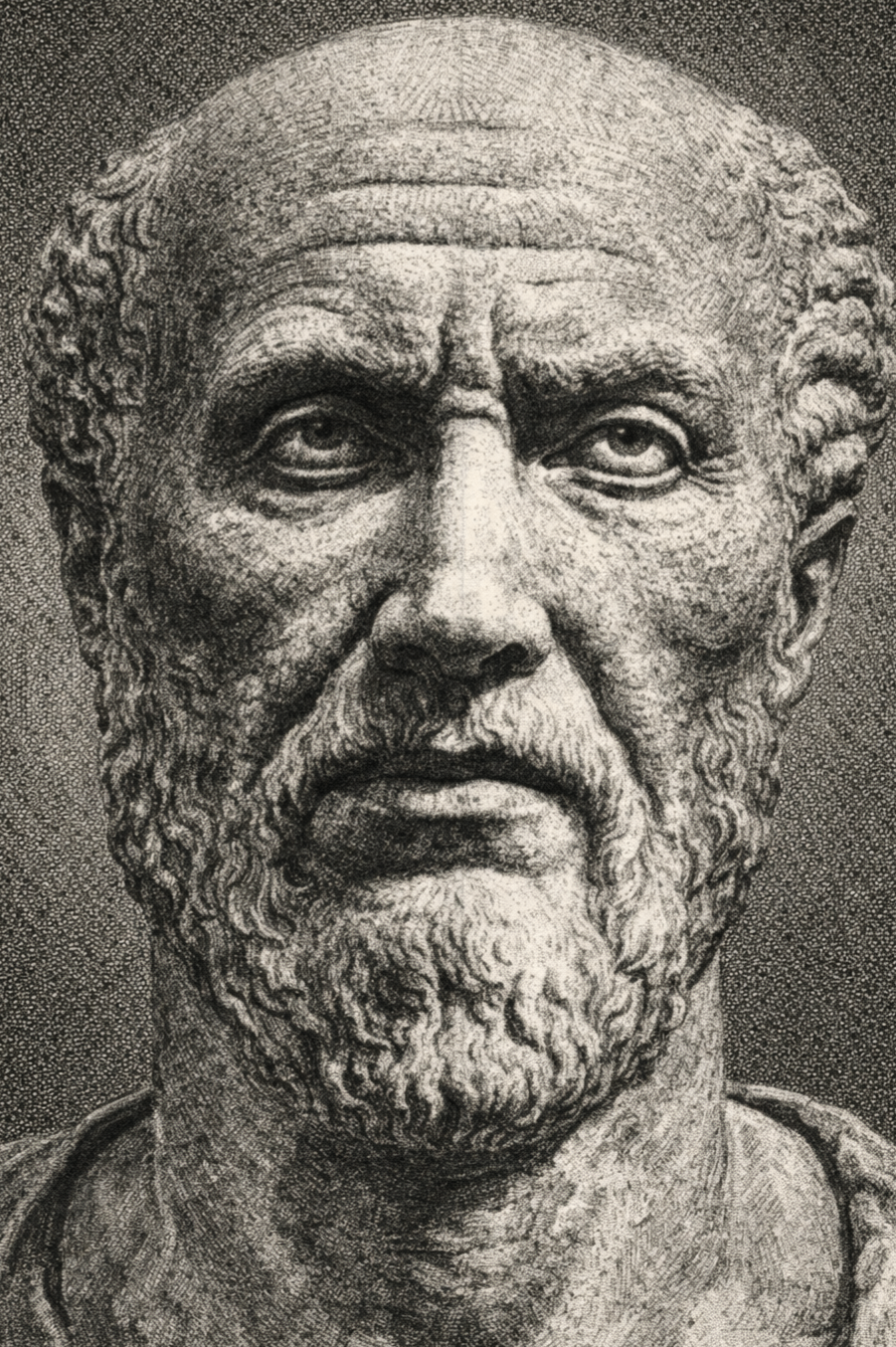
Plotinus
    Back to Cabinet
    Plotinus

    Plotinus(c. 204–270 CE)

    Philosopher and founder of Neoplatonism, developing a metaphysics of the One, Intellect, and Soul. His writings describe spiritual ascent and the transformation of perception through contemplation, uniting rigorous ontology with mystical intensity. Plotinus profoundly influenced late antique religion, medieval philosophy, Renaissance Platonism, and later mystical traditions.

    Read by Emerson (see Emerson's Library)

    2 titles in the Cabinet

    on Suicide, by T. Taylor

    Full title[show]

    Translations from the Greek of the following treatises of Plotinus: viz. On suicide, to which is added an extract from the Harleian ms. of the scholia of Olympiodorus on the Plædo of Plato respecting suicide

    The Dial's edition: London, 1834

    A focused volume translating Plotinus 'On Suicide,' expanded with closely related materials: an extract from Olympiodorus' scholia on Plato's Phaedo about suicide (with Greek text), two books on 'truly existing being,' and extracts on the Ideas and the Good, with additional notes from Porphyry and Proclus. Translated by Thomas Taylor.
    Full textExcerpt

    Read by Emerson (see Emerson's Library)

    Select Works by T. Taylor

    Full title[show]

    Select works of Plotinus, the great restorer of the philosophy of Plato: and extracts from the treaties of Synesius on Providence

    The Dial's edition: London, 1817

    A substantial Taylor selection of Plotinus' treatises (from the Enneads tradition), framed by an introduction that summarizes Porphyry's Life of Plotinus, and supplemented with extracts from Synesius's On Providence, presenting Plotinus as a guide to metaphysical ascent and the life of contemplation. Translated by Thomas Taylor.

    Full text

    Read by Emerson (see Emerson's Library)