Henry More
    Back to Cabinet
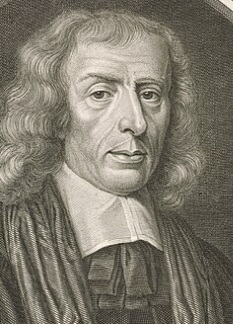
    Henry More

    Henry More(1614–1687)

    English philosopher-theologian at Christ's College, Cambridge and one of the central figures of the Cambridge Platonists, known for blending Christian doctrine with Platonic metaphysics and for writing widely on the soul, providence, enthusiasm, and 'atheism.' He wrote metaphysical treatises, devotional works, and philosophical poetry, often combining rigorous argument with visionary imagination.

    Read by Emerson (see Emerson's Reading) & Alcott (see Alcott's Library)

    2 titles in the Cabinet

    Psychodia [in Greek] Platonica

    Full title[show]

    Psychōdia platonica or A platonicall song of the soul, consisting of foure severall poems; viz. Psychozōia. Psychathanasia. Antipsychopannychia. Antimonopsychia. Hereto is added a paraphrasticall interpretation of the answer of Apollo consulted by Amelius, about Plotinus soul departed this life

    The Dial's edition: Cambridge, 1642

    More's first published work, a sequence of philosophical-religious poems presenting the soul's journey and metaphysical orientation in a deliberately 'Platonic' key. The 1642 volume is organized around four poems (with prefatory material), and it concludes with a paraphrastic interpretation of the famous oracle-response about Plotinus's soul (Apollo consulted by Amelius), plus explanatory glosses and an appended hymn.
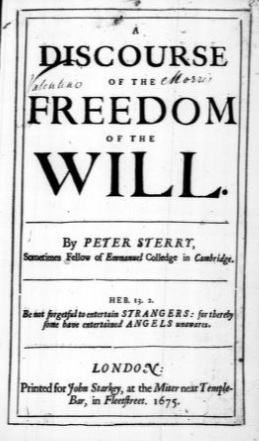
    Full textSurvives at Houghton Library

    Read by Alcott (see Alcott's Library)

    Works

    The Dial's edition: London, 1642

    A collected volume that consolidates More's major mid-career prose works so they would circulate together as an 'authorized' set. It includes An Antidote against Atheism, Enthusiasmus Triumphatus (on religious 'enthusiasm'), letters to Descartes and others, The Immortality of the Soul, and Conjectura Cabbalistica—bringing More's anti-atheist arguments, psychology of spirit, and speculative cabbalistic reading into one compendium.

    Full textSurvives at Houghton Library